Houses and designers · 6 min read
Five Achille Castiglioni lamps Flos still makes, and the idea behind each
What Arco, Taccia, Toio, Snoopy and Parentesi were each built to do, how they are made, and which room each one suits.
Italcasa Design
The short answer
Achille Castiglioni designed Arco, Taccia and Toio (1962) and Snoopy (1967) with his brother Pier Giacomo, and Parentesi (1971) from a sketch by Pio Manzù. Each rests on one idea: overhead light with no ceiling fixture, light without glare, a lamp built from stock parts, light on a tabletop, a spotlight set at any height. Flos makes all five.
Who Achille Castiglioni was
Achille Castiglioni (1918–2002) was an architect and industrial designer from Milan. He graduated in architecture from the Politecnico di Milano in 1944 and joined the practice run by his older brothers, Livio and Pier Giacomo. Livio left in 1952. Achille and Pier Giacomo worked as a pair until Pier Giacomo died in 1968, and Achille ran the studio alone until 2002.
He worked by looking closely at ordinary things. The Museum of Modern Art in New York (MoMA), whose collection includes Arco, Toio, Snoopy and Parentesi, records his motto as “design demands observation.” The five lamps here show what that meant: a street light, a car headlight, fishing-rod rings and a sailboat fitting all found their way indoors.
Flos dates its own history from 1962, the same year it gives for Arco, Taccia and Toio. The Castiglioni studio moved that year to Piazza Castello 27 in Milan, where the Fondazione Achille Castiglioni now opens it to visitors.
01
Arco
1962 · Floor lamp · Achille and Pier Giacomo Castiglioni
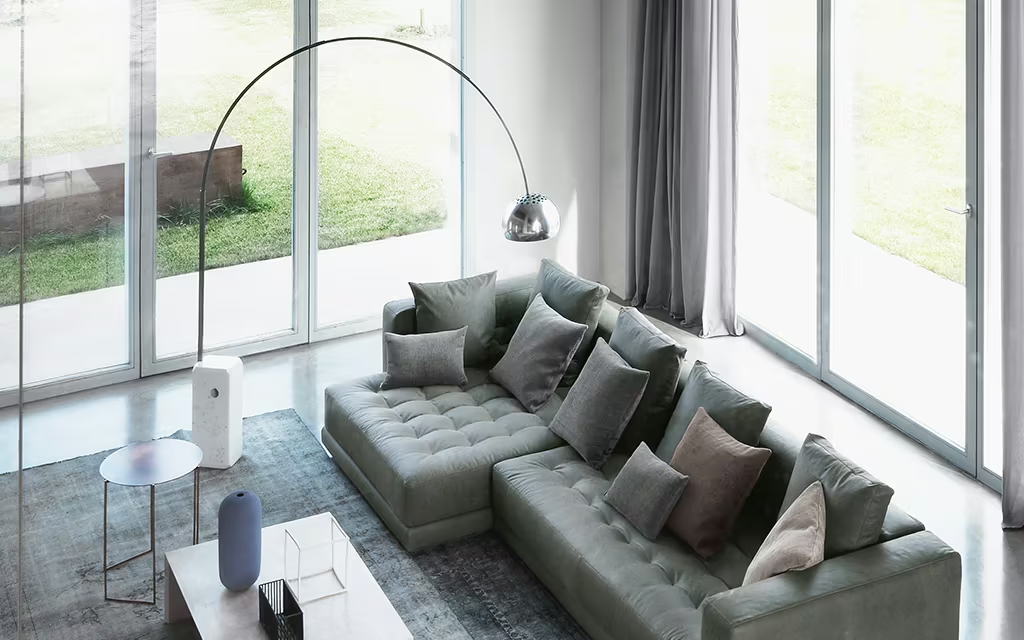
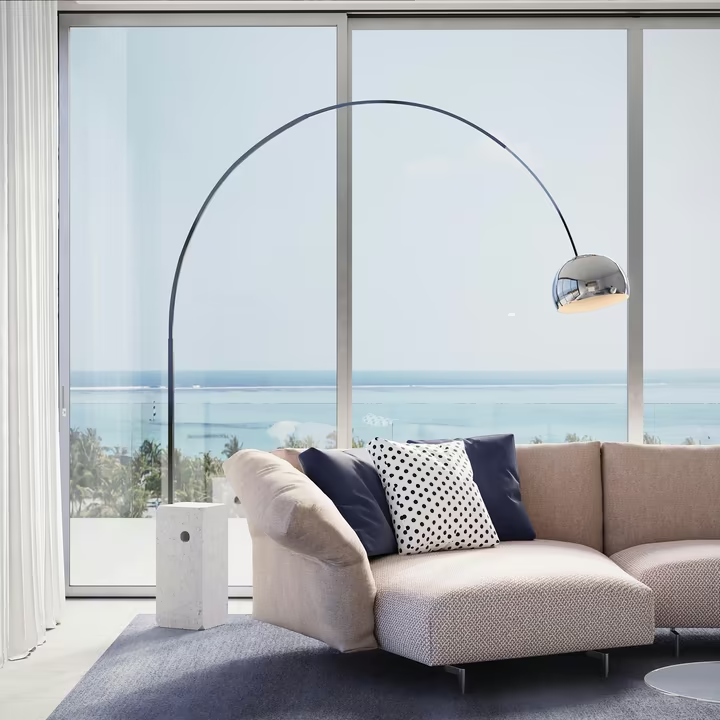
The problem was plain: put light over the middle of a table without a fixture in the ceiling above it. The brothers borrowed the form of a street light and brought it indoors. The shade hangs over the table from a base on the floor, and no hole is drilled overhead.
The base is a block of white Carrara marble of about 65 kilograms, roughly 143 pounds, and it works as the counterweight. The hole through it sits at the center of gravity. It fixes the upright, and a broom handle pushed through it lets two people move the lamp. The arc is three stainless steel sections that slide inside one another and hide the wiring.
The Fondazione Achille Castiglioni gives the reflector’s reach as up to two meters, about six and a half feet, from the base. Flos lists the current lamp at 86.61 inches long, and MoMA records its example as just over 95 inches high. Arco suits a dining table or a seating group in a room with the height and the floor to take it.
- White Carrara marble base, about 65 kg
- Three telescoping stainless steel sections
- Perforated aluminum reflector
02
Taccia
1962 · Table lamp · Achille and Pier Giacomo Castiglioni
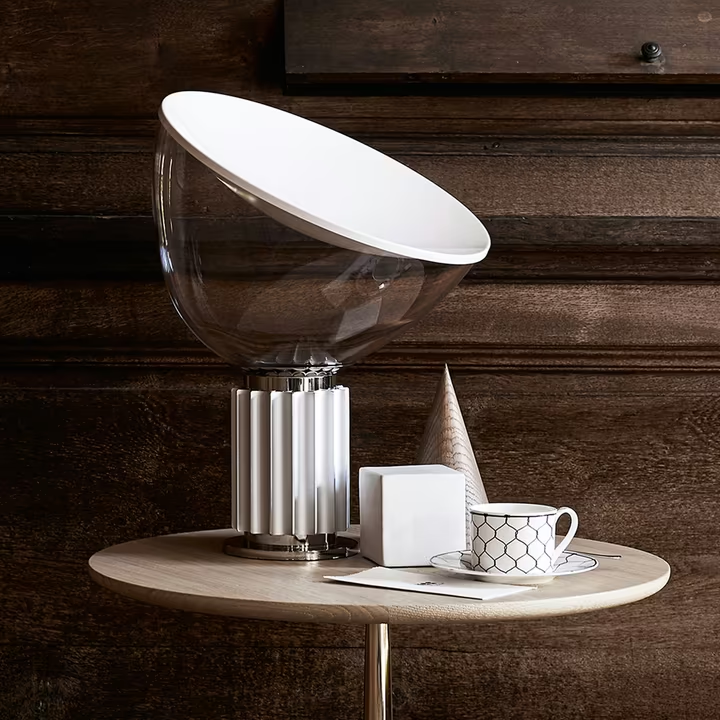
Taccia is a hanging lamp turned upside down. The light source is hidden in the base, so there is no direct glare. The light travels up, strikes a white aluminum reflector and comes back into the room.
The reflector rests on a bowl of clear, mouth-blown glass. The bowl is not fastened down. It sits on the round rim of the base and turns to aim the light. The ribbed sleeve around the base is often compared to a classical column. It was made as a cooling surface for a hot bulb, and the designers likened it to the cooling fins of an engine. Flos notes that the LED version no longer needs it for that.
The design was worked out in 1958 and shown in Chicago in March 1959. Flos put it into production in 1962. Taccia gives reflected light and has a dimmer. It suits a sideboard, a console or a low table. Flos also makes a smaller size.
- Clear mouth-blown glass bowl
- White aluminum reflector
- Ribbed base, made for cooling
03
Toio
1962 · Floor lamp · Achille and Pier Giacomo Castiglioni
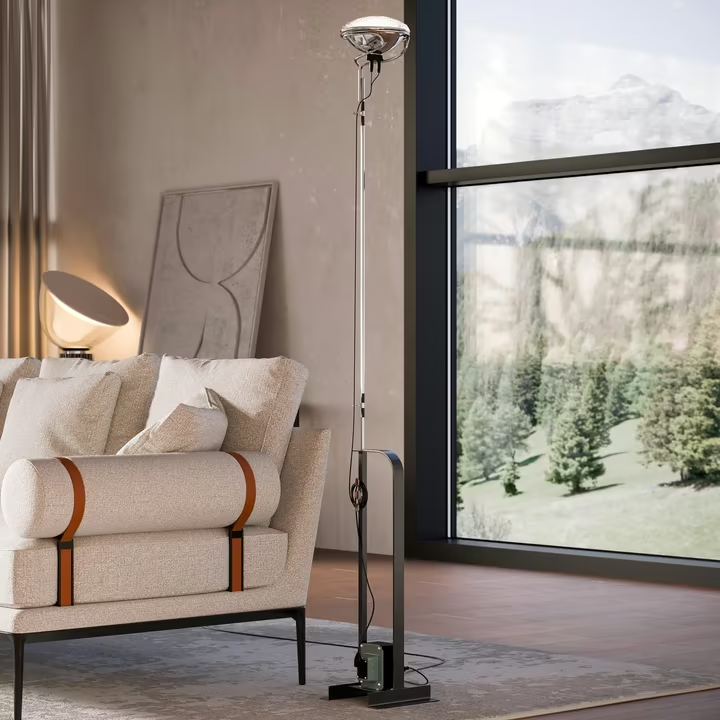
Toio starts from a part, not a shape. The light source was a 300-watt car headlight imported from the United States. The headlight set the kind of light, and the parts needed to hold and power it set the form. The Fondazione describes the lamp as an assembly of industrial objects already in production, each given a new job. Flos says the name is a nod to the word toy.
The transformer sits in plain view at the foot, where it doubles as the counterweight. The stem is a hexagonal rod. Fishing-rod rings guide the cable up it, a screw sets the height, and a cleat takes up the spare cord. The Victoria and Albert Museum’s example, from the first issue of 1962, carries the headlight’s stamp: Medium Flood / 300W / GE / 120V / USA.
Toio gives indirect light. The headlamp sits at the top of the stem and the room is lit by reflection, which suits a living room with no ceiling fixture. The current version takes an LED bulb. It needs little floor: MoMA records its example as about eight inches wide and deep.
- Car headlamp, now with an LED bulb
- Hexagonal stem, fishing-rod rings
- Exposed transformer as counterweight
04
Snoopy
1967 · Table lamp · Achille and Pier Giacomo Castiglioni
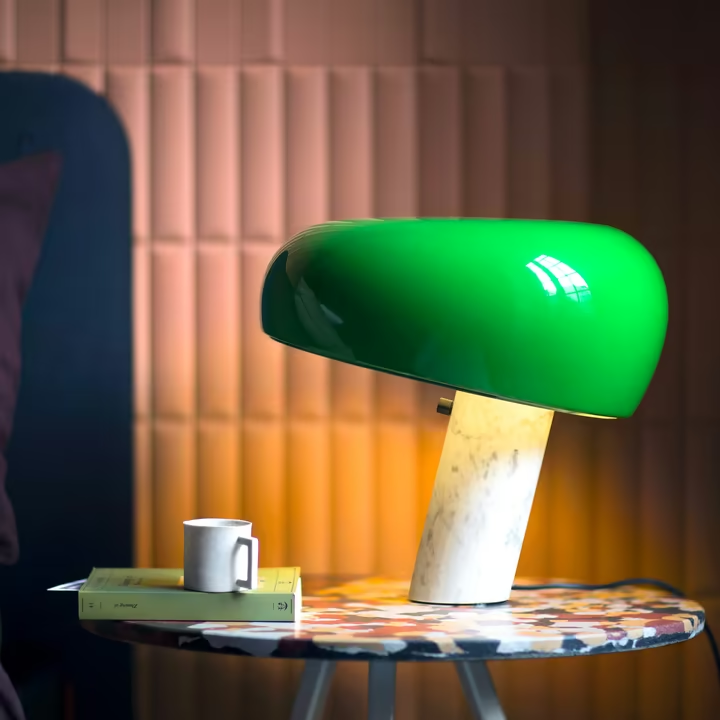
Snoopy puts direct light on the surface it stands on. The tilted shade looks as if it should tip the lamp over, and that profile gave the lamp its name: the Fondazione says it comes from Charlie Brown’s dog. Flos describes it as functional design infused with humor.
It does not tip. The weight is in the base, solid white Carrara marble that also houses the light source. A thick disc of clear glass is clamped to the marble by the lamp holder, and the enameled aluminum reflector rests on the glass. Three holes in the top of the reflector let heat out.
A touch dimmer on the base switches the lamp and sets its level. Snoopy suits a desk, a reading table or a console, anywhere light is wanted on the surface itself.
- Solid white Carrara marble base
- Thick clear glass disc
- Enameled aluminum reflector, touch dimmer
05
Parentesi
1971 · Floor-to-ceiling lamp · Achille Castiglioni and Pio Manzù
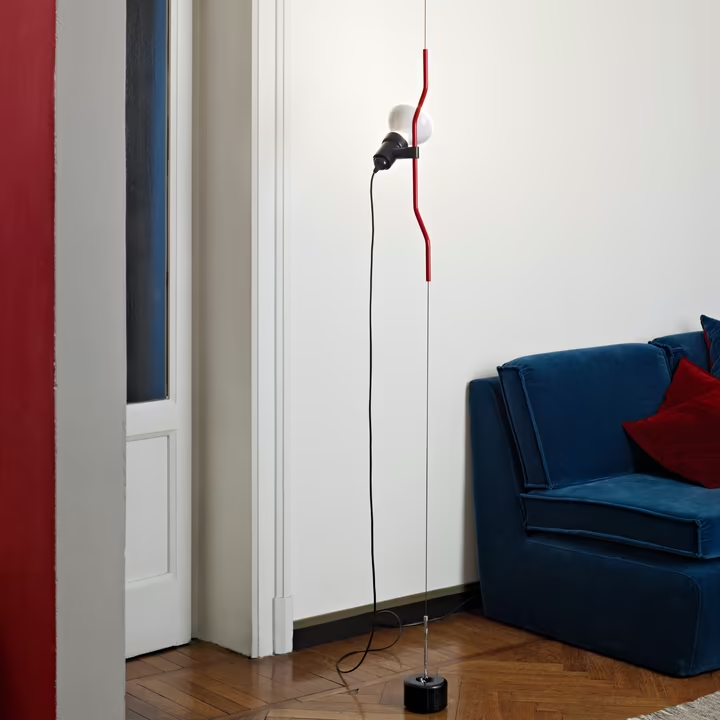
Parentesi began as a sketch by Pio Manzù, the designer of the Fiat 127, who died in 1969. He and Castiglioni never met. Manzù had drawn a light that moved along a rod fixed between floor and ceiling and locked with a screw. Castiglioni replaced the rod with a steel cable and did away with the screw. Flos has made the lamp since 1971 and credits both men.
The cable hangs from a hook in the ceiling and is pulled taut by a cast-iron counterweight. It passes through a steel tube bent like a parenthesis, and the bend is the mechanism: friction between cable and tube holds the lamp wherever it is left. The tube carries a lamp holder on a rotating joint and a bare spot bulb.
Flos points out that Parentesi can stand in for a floor lamp in a corner or a table lamp beside a bed. It needs a hook in the ceiling, and its counterweight hangs just above the floor.
- Steel cable, ceiling to floor
- Cast-iron counterweight
- Bent steel tube, held by friction
Choosing among the five
Start with the job the lamp has to do, then check the room. Arco needs ceiling height and clear floor for its marble base. Parentesi needs a hook overhead. Taccia and Snoopy need only a surface, and Toio a small patch of floor.
- Light over a dining table or a sofa where there is no ceiling fixture: Arco.
- Reflected light with no visible bulb, on a sideboard or console: Taccia.
- Indirect light for a whole room from a narrow floor lamp: Toio.
- Direct, dimmable light on a desk or side table: Snoopy.
- A spotlight that stops at any height, beside a bed or in a corner: Parentesi.
Made by Flos today
Five lamps, all still made. Ask about the one for your room.
No obligation · Reply within 1 business day
Sources
- Fondazione Achille Castiglioni. Biography
- The Museum of Modern Art, New York. Achille Castiglioni: Design (1997 exhibition site), introduction by Paola Antonelli
- The Museum of Modern Art, New York. Achille Castiglioni, Pier Giacomo Castiglioni. Arco Floor Lamp. 1962 (collection record 65.1990)
- The Museum of Modern Art, New York. Achille Castiglioni (artist page, works online)
- Flos. The history of Flos, since 1962
- Fondazione Achille Castiglioni. The foundation
- Flos. Arco Led F0303000 (product page, professional catalog)
- Fondazione Achille Castiglioni. ARCO, lampada da terra, 1962 (project record)
- The Museum of Modern Art, New York. Achille Castiglioni: Design (1997 exhibition site), Arco floor lamp, 1962
- Flos. Arco, design icon since 1962
- Flos. Taccia F6602030 (product page, professional catalog)
- Fondazione Achille Castiglioni. TACCIA, lampada da tavolo a luce riflessa, 1962 (project record)
- Flos. Taccia Small F6604030 (product page, professional catalog)
- Flos. Toio Led FU763009 (product page, professional catalog)
- Fondazione Achille Castiglioni. TOIO, lampada da terra, 1962 (project record)
- Victoria and Albert Museum. Toio, standard lamp (museum no. M.35:1-1992)
- The Museum of Modern Art, New York. Achille Castiglioni, Pier Giacomo Castiglioni. Toio Floor Lamp. 1962 (collection record 459.1970)
- Flos. Snoopy FU638030 (product page, professional catalog)
- Fondazione Achille Castiglioni. SNOOPY, lampada da tavolo, 1967 (project record)
- Flos. Parentesi FU560035 (product page, professional catalog)
- Flos. Parentesi at 50
- Fondazione Achille Castiglioni. PARENTESI, lampada a saliscendi, 1971 (project record)
- The Museum of Modern Art, New York. Achille Castiglioni: Design (1997 exhibition site), Parentesi lamp, 1971 (1970)
- ADI Design Museum. Parentesi suspension lamp (Compasso d’Oro collection record)