Guide · 6 min read
Aniline, semi-aniline or pigmented: how a leather sofa's finish decides the way it ages
What each leather finish is, how it looks, feels and wears, which households it suits, how to care for it, and what to ask before ordering.
Italcasa Design
The short answer
The finish is the coating a tannery applies to the leather's surface, and it largely decides how a sofa ages. Aniline leather has no pigment coat: it looks the most natural, absorbs spills and develops a patina. Pigmented leather is fully coated: it resists stains and fading and stays uniform. Semi-aniline sits between them.
Finish and grain are two different questions
Leather is described with two sets of terms, and they are easily confused. Finish terms (aniline, semi-aniline, pigmented) say what was applied to the surface. Grain terms (full grain, corrected grain, top grain) say what was done to the hide first. The European leather-trade standard, EN 15987, lists them under separate headings.
Full grain means the hide's original grain surface is intact. Only the hair and the outer skin layer have been taken off. Corrected grain means part of the grain layer was buffed off and a new surface built up in its place, often with an artificial grain pattern embossed on top.
Top grain is the loose term. The Leather Research Laboratory at the University of Cincinnati treats it as the same as full grain. The industry association Leather Naturally uses it for leather whose top surface has been lightly sanded. Ask which meaning is intended.
Grain and finish are linked, though. Aniline leather usually comes from the best hides, because a transparent finish masks nothing. Heavier finishes usually go on lower-quality full-grain and corrected-grain leathers. So the term full grain does not tell you the finish.
What each finish is
Tanneries finish leather to improve its appearance and to protect the grain in use. The three finishes differ in how much pigment sits on the surface.
- Aniline: dyed with soluble dyes and given, at most, a transparent finish. Under EN 15987 that finish holds no pigment and the natural grain is clearly visible.
- Semi-aniline: the finish contains a small quantity of pigment, and the natural grain must still be clearly visible.
- Pigmented: a finish containing pigment covers the grain or surface completely, and its top layer is generally polyurethane. It is also sold as protected leather.
The Cincinnati laboratory compares the two finishes that carry pigment to deck stains: semi-aniline to a semi-transparent stain, pigmented leather to a solid one.
| Finish | Look and feel | Protection | How it ages | Care |
|---|---|---|---|---|
| Aniline | Natural grain and markings stay visible; color may vary slightly across the hide; soft, natural feel | Transparent finish with no pigment; absorbs liquids readily | Builds a patina; the most open to fading, stains and scratches | Dust; blot spills at once; follow the maker's instructions; patch-test every product |
| Semi-aniline | Grain still visible; more even color; hard to tell from aniline | Light finish with a small amount of pigment | Little patina; better light fastness than aniline; spills can still damage it | Dust; wipe now and then with a clean, damp cloth |
| Pigmented | Uniform color; grain pattern commonly embossed; can feel less natural | Opaque pigmented coat, generally polyurethane | Changes least; typically the most resistant to stains, scratches and fading | Easiest to clean; color-repair products can restore scratches |
How each finish looks and feels
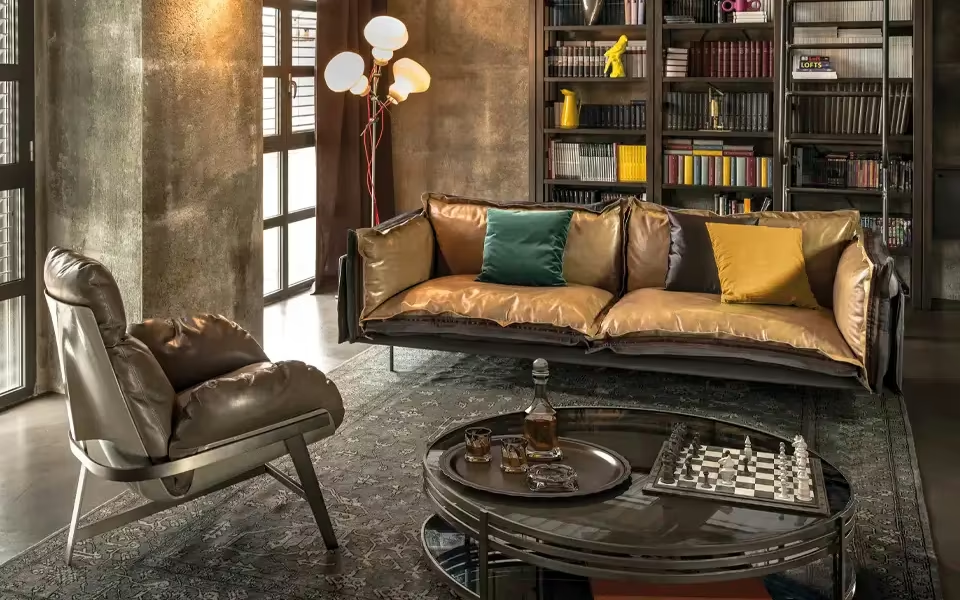
No leather looks more natural than aniline. The grain and the natural markings stay visible, and color may vary slightly across the hide. With no opaque pigment or heavy coating on the surface, it stays soft and can breathe.
Semi-aniline looks close to it. The grain can still be seen, and color varies less across the hide. The Furniture Industry Research Association (FIRA) notes that most people cannot tell aniline and semi-aniline upholstery leather apart.
Pigmented leather looks the most uniform. The coat hides the natural grain, and a grain pattern is commonly embossed back in. Italy's national leather research body, SSIP, notes that aniline leather feels light and flexible in the hand, while a heavily pigmented leather can seem rather plastic.
How each finish ages
Patina comes first. With wear, aniline leather develops a patina of its own. If you would rather the sofa kept its original look, semi-aniline and pigmented finishes are the more consistent choices, because they patina less.
Sunlight comes next. Over time, direct sun and strong heat can fade leather and damage it. Aniline is the most susceptible of the three to light, and semi-aniline improves on it. European tests grade light fastness from 1 to 8 against blue wool references, each roughly twice as fade-resistant as the one below.
Stains follow the same order. Aniline leather is porous and absorbs liquids readily. Semi-aniline resists soiling better, though FIRA warns that spills still damage it easily. A pigmented coat keeps dirt from soaking in, which makes cleaning much easier.
Skin contact matters too. A Swedish tannery explains that body oils from hands and necks slowly dissolve a leather's surface protection. Unless the leather is cleaned and protected regularly, the oils soak in and leave dark stains.
Then scratches. Leather suppliers describe pure aniline as the least protected, semi-aniline as guarded against scratches and scuffs, and pigmented leather as typically the most resistant to scratching and abrasion.
Which finish suits which household
- Children and frequent spills: pigmented. FIRA calls it the most durable upholstery leather, and it repels liquids well.
- Pets: put scratch resistance first. A pigmented coat typically resists scratches best, and color-repair products can repair the scratches that do appear.
- Strong sun: pigmented again. One leather supplier says plainly that pure aniline should be kept out of direct sunlight.
- Heavy daily use: pigmented or semi-aniline. For color rubbing off, the European furniture-leather guide EN 13336 sets its recommended values at 500 dry rubbing cycles for both, against 50 for aniline.
- A quieter room and a liking for patina: aniline. It suits settings free from heavy stains and spills, where markings and color change are wanted.
Basic care for each finish
All three share a routine. Dust often with a soft, lint-free cloth. Vacuum with a soft brush, since crumbs and fluff can wear leather early. Blot spills at once with a clean, dry cloth and do not rub. Keep the sofa out of direct sunlight and away from strong heat. Keep household detergents, polishes and abrasive cleaners off it. Test any product on a hidden patch first.
Aniline needs the lightest touch. Leather Naturally likens it to caring for silk and says to follow the manufacturer's recommendations. Products can darken it, and some stains may not come out.
Semi-aniline takes an occasional wipe with a clean, damp cloth. Pigmented leather is the easiest to clean, and color-repair products can restore scratches and other color damage. If the maker's instructions differ, follow them.
Questions to ask before you order
Finish is hard to judge by eye. The Cincinnati laboratory reports that pigmented or corrected-grain leather is sometimes marketed as semi-aniline, and semi-aniline described as aniline. Ask, and get the answers in writing.
- Which finish is it: aniline, semi-aniline or pigmented?
- Is the grain full or corrected, and is the grain pattern embossed?
- If it is called top grain, has the surface been sanded?
- Is every panel the same leather? Finished splits are weaker than grain leather.
- Was it tested to EN 13336, and what were the light-fastness and rubbing results?
- What care instructions come with it? EN 13336 itself advises supplying them.
- Can you see a sample large enough to show the natural markings?
Questions people ask
Is full-grain leather the same as aniline leather?
No. Full grain describes the hide: its original surface is intact. Aniline describes the finish: transparent, with no pigment. All three finishes are made on full-grain hides, so ask about both.
Does a leather sofa need conditioning?
Only with a product the leather's maker approves. The Cincinnati laboratory warns that an incompatible conditioner can cause finish peeling, cracking, color transfer or yellowing. One supplier bars conditioners on its pure aniline leathers and allows them on pigmented ones.
Can stains and scratches be repaired?
Often. Leather Naturally calls leather repairable in many cases, and color-repair products work on pigmented furniture. On aniline, some stains may never come out. For scuffs, scratches or color change, FIRA advises contacting a leather specialist.
Choosing a leather finish
You know the three finishes. Now see which one your room asks for.
Tell the studio about the room and who uses it. A reply comes within one business day.
- 1
Tell the studio about the room
Who uses it, the light it gets, what it sits beside
- 2
The studio walks you through every finish
Aniline, semi-aniline and pigmented, against how you live
- 3
Leather, fabric and color are chosen with you
Then the order is managed from the factory to your door
No obligation · Reply within 1 business day
Sources
- Leather Research Laboratory, University of Cincinnati. Aniline, Semi-Aniline & Pigmented Leather
- Leather Research Laboratory, University of Cincinnati. Full Grain & Top Grain
- Leather Research Laboratory, University of Cincinnati. Corrected Grain Leather
- Leather Research Laboratory, University of Cincinnati. Leather Surface Quality / Classification
- Leather Research Laboratory, University of Cincinnati. Leather Conditioner & Cleaner Testing
- European Committee for Standardization (CEN), preview hosted by iTeh Standards. EN 15987:2022 Leather – Terminology – Key definitions for the leather trade
- Stazione Sperimentale per l'Industria delle Pelli e delle materie concianti (SSIP). Principali definizioni delle pelli e caratteristiche merceologiche
- European Committee for Standardization (CEN), preview hosted by iTeh Standards. EN 13336:2022 Leather – Upholstery leather characteristics – Guide for selection of leather for furniture
- International Organization for Standardization (ISO), preview hosted by iTeh Standards. ISO 105-B02:2014 Textiles – Tests for colour fastness – Part B02: Colour fastness to artificial light: Xenon arc fading lamp test
- Furniture Industry Research Association (FIRA). Leather types, characteristics and maintenance
- Leather Naturally. How to Care for Leather (fact sheet)
- Leather Naturally. Leather Terminology (fact sheet, March 2026)
- Leather Naturally. Leather Frequently Asked Questions
- Leather Naturally. Modern Cow Leather Processing (A Guide to Modern Leather Making, part three)
- World Leather, hosted by Leather Naturally. Back to Basics: Leather Manufacture
- Cortina Leathers. Leather Types
- Cortina Leathers. Care & Cleaning
- Moore & Giles. Leather Finish Types
- Moore & Giles. Leather Care & Cleaning
- Elmo Leather. Leather Care
- Sørensen Leather. Type (aniline, semi-aniline, protected)