
August 22, 2026
What Makes a High-End Kitchen Worth the Money
TL;DR
- A high-end kitchen is defined by construction, not price tag: cabinet box quality, hardware rated for real loads, a layout that matches how you cook, and lighting treated as part of the design.
- Cabinetry takes the biggest bite of the budget on the projects we plan, usually 40-45% of the total, with appliances and countertops next.
- Italian and German cabinet lines solve different problems. Italian brands give you color, lacquer, and furniture-grade detailing. German brands give you engineering and internal organization. Pick based on how you'll use the room.
- Michigan permits aren't optional for structural, electrical, plumbing, or HVAC changes, and unpermitted work can stall a remodel or complicate a sale.
- Green is the 2026 color to watch. Sage, avocado, and forest tones are showing up in luxury kitchens as a timeless alternative to all-white, per Elle Decor.
A high-end kitchen isn't just an expensive kitchen. It's a kitchen where every material, joint, and fixture got chosen on purpose. The cabinet box holds real weight for decades. The island earns its footprint. The lighting was specified like furniture, not picked off a shelf at the end.
If your kitchen looks pricey but the drawers rattle and the layout fights you while you cook, it isn't high-end. It's just costly.
We've been sourcing and specifying kitchens for Metro Detroit homes for more than three decades, and the question we hear most from clients in Royal Oak, Troy, and Birmingham isn't "what's trendy." It's "what's actually worth paying for." Here's the honest answer.
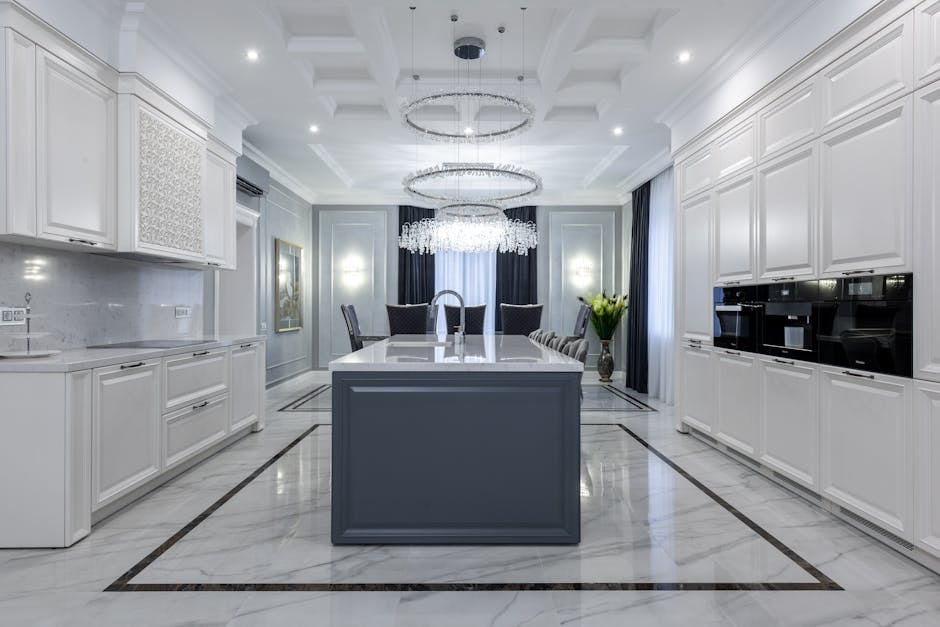
Table of Contents
- What is considered a high-end kitchen?
- What makes a kitchen look luxury?
- How much does a high-end kitchen remodel actually cost?
- Italian or German cabinets: which fits your project?
- How do you plan a high-end kitchen remodel, start to finish?
- What's next if you're planning a remodel
- Frequently asked questions
What is considered a high-end kitchen?
A high-end kitchen is one where cabinetry, countertops, appliances, and hardware are all chosen for performance as well as looks, with construction that survives daily use instead of a photo shoot. That starts with heavy-duty hinges and drawer runners built to carry loaded cookware and stoneware without sagging, which SieMatic treats as a baseline requirement for high-end cabinetry rather than an upgrade.
It also means the countertop was chosen deliberately. High-end kitchens use stone, stainless steel, wood, ceramic, or laminate, sometimes more than one material in the same room, each selected for how it performs where it sits, according to SieMatic's guide to high-end kitchens. A waterfall marble island next to a hardworking prep counter in a tougher material isn't showing off. That's smart material allocation.
Price is a symptom, not a definition. A $60,000 kitchen with well-built imported cabinetry, a sound layout, and quality hardware will outlive a $150,000 kitchen with flashy finishes and cheap drawer boxes hiding behind them.
What makes a kitchen look luxury?
A kitchen looks luxury when the layout, lighting, and materials all point toward one idea instead of competing for attention. Layout does more of that work than homeowners expect. KRM Custom Homes points to open U-shaped or three-sided kitchens as the layout of choice in luxury builds, because they maximize storage and counter space while keeping the classic kitchen triangle intact.
A few moves consistently read as luxury:
- A statement fixture over the island. Not recessed cans alone. A sculptural pendant or chandelier that works as a vertical showpiece, brightening the room while anchoring it visually, per KRM Custom Homes.
- A pot filler over the range. Small detail, big signal. It kills the daily chore of hauling a full stockpot from sink to stove, and it tells you the kitchen was designed by someone who cooks.
- An island that breaks the rules. Contrasting stone, a different cabinet finish, a sculptural leg. The island is usually the one piece meant to depart from the rest of the room, a move Elle Decor calls out again and again in its luxury kitchen roundups.
- Appliance details that match the room. Knurled Wolf range knobs, integrated panel-ready refrigeration, hardware finishes that belong to the kitchen instead of announcing themselves as appliance-store chrome.
- Color with intention. All-white still exists, but sage, avocado, and forest greens are having a real moment for 2026 because they read as timeless rather than trendy, according to Elle Decor.
Pro tip: torn between a bold backsplash and a bold island? Pick one. Luxury kitchens read as calm because they have a single focal point, not three fighting for your eye.
One more practitioner habit: we hang island pendants so the bottom of the shade sits roughly 30 to 36 inches above the countertop. Higher and it stops feeling like a fixture over the island. Lower and it blocks the sightline across the room. If your ceilings are 9 feet or taller, size up the fixture rather than dropping it further.
How much does a high-end kitchen remodel actually cost?
In our Metro Detroit projects, a genuine high-end kitchen usually starts in the mid-$60,000s for a well-executed mid-size room with imported cabinetry, and climbs into the $150,000 to $250,000-plus range for larger kitchens with full custom cabinetry, natural stone, and a serious appliance package. Where you land depends on square footage, cabinet material, and whether you're relocating plumbing or electrical.
Here's how we typically see the money split on a well-planned project:
| Cost factor | Typical share of budget | What drives the price |
|---|---|---|
| Cabinetry | 40-45% | Material (laminate vs. lacquer vs. wood veneer), custom sizing, imported vs. domestic sourcing |
| Appliances | 20-25% | Panel-ready vs. standard finish, pot fillers, built-in coffee systems |
| Countertops & backsplash | 15-20% | Stone vs. quartz vs. ceramic, slab size, edge detail, tile complexity |
| Island upgrade | 8-12% | Waterfall edges, contrasting finish, seating, integrated outlets |
| Lighting & hardware | 6-10% | Statement fixtures, cabinet hardware, under-cabinet lighting |
Show the math. Say your total is $90,000. Multiply that number by each share to get your line-item ceilings. Using one workable set of percentages inside those ranges: cabinetry at 45% is $40,500, appliances at 22% is $19,800, countertops and backsplash at 15% is $13,500, the island at 10% is $9,000, and lighting and hardware at 8% is $7,200. Add them up and you're at exactly $90,000.
Now the useful part. If your cabinet quote comes back at $55,000 against that same $90,000, cabinetry just ate 61% of the budget and something else has to give, usually the appliance package or the island finish. That's the threshold to watch: once cabinetry passes about half your total, you're no longer building a balanced kitchen, you're building a cabinet showroom with a range in it. Run the math before you fall for a slab you can't afford next to the cabinets you want.
For a line-item look at this market specifically, our kitchen cabinet cost guide for Metro Detroit breaks down 2026 pricing by cabinet material and finish.
Pro tip: get the cabinet quote first. Cabinetry pricing swings harder than any other category based on material and finish, so lock that number and let everything else flow from what's left.
Italian or German cabinets: which fits your project?
Italian cabinetry tends to win on design range and finish variety. German cabinetry tends to win on engineering precision and internal storage. Neither is objectively better. The right pick depends on what you want the room to do.
| Factor | Italian brands | German brands |
|---|---|---|
| Design range | Broad color and finish palette, lacquer, bold geometry | Restrained, minimalist palettes |
| Hardware feel | Design-forward pulls, sculptural details | Precision-engineered, understated |
| Storage systems | Strong, often paired with modular furniture lines | Highly systematized internal organization |
| Lead time | Several months typical on custom orders, plus shipping and customs | Similar on custom configurations |
| Best fit | You want the kitchen to be a design statement | You want function-first engineering |
If you want a kitchen that reads as art, with a lacquered island, a sculptural pull, an unexpected color, and furniture-grade detailing, Italian brands are built for exactly that. Our brands page covers the 40+ manufacturers we work with, including lines like LAGO and MOGG, both of which treat cabinetry as design furniture rather than utility boxes.
Two things nobody warns you about. First, high-gloss lacquer shows fingerprints and every wave in a wall, so it demands a flat install and a household that doesn't mind wiping doors. Matte lacquer and textured melamine forgive far more. Second, if you're ordering a run now and think you might add a piece later, order the extra door or panel with the original run. Finish batches drift, and a lacquer or veneer added a year later rarely matches the first order under kitchen lighting.
Pro tip: if you cook seriously in a small footprint, ask specifically about internal drawer systems during your consultation. Ask what the runners are rated to carry and pull a loaded drawer yourself. That's where brands separate in daily use, not on the showroom floor.
How do you plan a high-end kitchen remodel, start to finish?
There's a sequence to this, and skipping steps is where projects blow their budget or their calendar. Here's the order that works:
- Set a real budget before you shop finishes. Pick the total, then allocate it using the percentages above. Falling for a $22,000 range before you've priced cabinetry is the single most common way projects go over.
- Nail the layout. Whether you keep the footprint or move walls, choose a U-shaped, three-sided, or galley plan based on how you cook, not how it photographs. KRM Custom Homes notes that open, three-sided layouts consistently balance storage and workflow best in luxury builds.
- Confirm which permits you need. In Michigan, structural changes, electrical rewiring, plumbing relocation, and HVAC modifications all require permits, and the work has to meet the Michigan Residential Code, based on the International Residential Code with state amendments. Electrical work must also meet National Electrical Code standards, including GFCI protection on countertop outlets.
- Choose cabinetry and countertop together. Lock the cabinet brand and finish, then pick a countertop that works functionally alongside it: stone where heat and knives land, wood or laminate where you want warmth. SieMatic notes each material carries its own aesthetic and functional tradeoffs, so this is not a purely visual call.
- Design the island as its own project. Decide now whether it's the contrast piece or the workhorse, and settle seating, outlets, and waterfall edges before anything is ordered. Retrofitting an island after cabinets ship is expensive and often impossible.
- Order lighting early. Custom and imported fixtures, like those from FLOS, often run longer lead times than domestic options. This can't be a last-minute pick.
- Finalize appliances. Panel-ready versus standalone, pot filler or not, any specialty units. Cabinet openings get built to exact appliance dimensions, so late changes mean new cabinets.
- Plan for customs if you're importing. Italian cabinetry and furniture clear customs and pass through warehousing before delivery, which adds real weeks to the schedule. That's the logistics piece we handle end to end through our kitchen and bath design service.
- Schedule installation behind your inspections. Cabinets and countertops go in after rough electrical, plumbing, and HVAC pass, never before.
- Walk it with a punch list. Test every drawer glide, hinge tension, and outlet before you sign off. Adjustments are trivial while your installer is still on site and a scheduling headache after.
What most people miss
Two things trip up even careful homeowners: import lead time and electrical scope.
A custom Italian cabinet order is not a two-week turnaround. Production, customs clearance, and freight all stack up, so start that conversation months ahead of the date you want to cook a holiday meal in the room.
On the electrical side, a pot filler, under-cabinet lighting, and a bigger range frequently mean added circuits and a panel that's already full. We've watched more than one project stall because a 100-amp panel couldn't take another dedicated 20-amp run. Have an electrician look at your panel during design, not the morning after demo.
If you're specifying this for a client rather than yourself, our trade program gives you direct trade pricing across the full brand catalog, which makes phasing these decisions much cleaner.
What's next if you're planning a remodel
Come into our Royal Oak or Troy showroom and put your hands on the actual finishes. Photos lie about lacquer, and no screen shows you how a green cabinet shifts under warm light versus daylight.
Bring three things with you: a photo of your existing room taken at the time of day you use it most, your ceiling height, and your appliance list if you already own the range. Those three details let us sanity-check a layout and a fixture drop in the first meeting instead of the third. Kitchens are one of the highest-value rooms to get right before a sale in a market like Royal Oak, so the details you settle early tend to pay you back twice.
Whether you're outfitting a new build, reworking an older Royal Oak bungalow, or specifying finishes for a commercial dining room, start on our get started page or reach us through contact to set up a consultation.
Frequently asked questions
How long does a high-end kitchen remodel actually take?
Plan on 3 to 6 months from final design approval to move-in for most high-end kitchens, longer with custom imported cabinetry or lighting. Permitting, inspections, and shipping are the big variables. Installation itself is rarely what holds you up.
Can I mix Italian cabinetry with existing American appliances?
Yes, and most kitchens do. The trick is confirming appliance dimensions and panel requirements before cabinets are finalized, because openings and panel-ready fronts are built to exact specs. Bring the model numbers, not the brand names.
What's the difference between a high-end kitchen and a custom kitchen?
Custom means the cabinetry is built to your exact dimensions and specifications instead of stock sizes. High-end refers to material and construction quality, and a kitchen can be high-end without being fully custom. The two overlap often, because custom builds make it easier to hit the fit and finish a high-end kitchen demands.
Planning a project of your own?
Start a Conversation